I didn’t even have to buy any new reference books when I whipped out my dozen tomes of vampire lore for my college senior capstone project, which consisted of 20 pages of satirical and historical vampire poetry. Sufficed to say, my pseudo bookshelves (which translates to dozens of book piles in my tiny NYC apartment) revolve around folklore, encyclopedias of beasties, and the history of magic around the world. Translation: I’m a huge nerd obsessed with mythological and magical creatures.
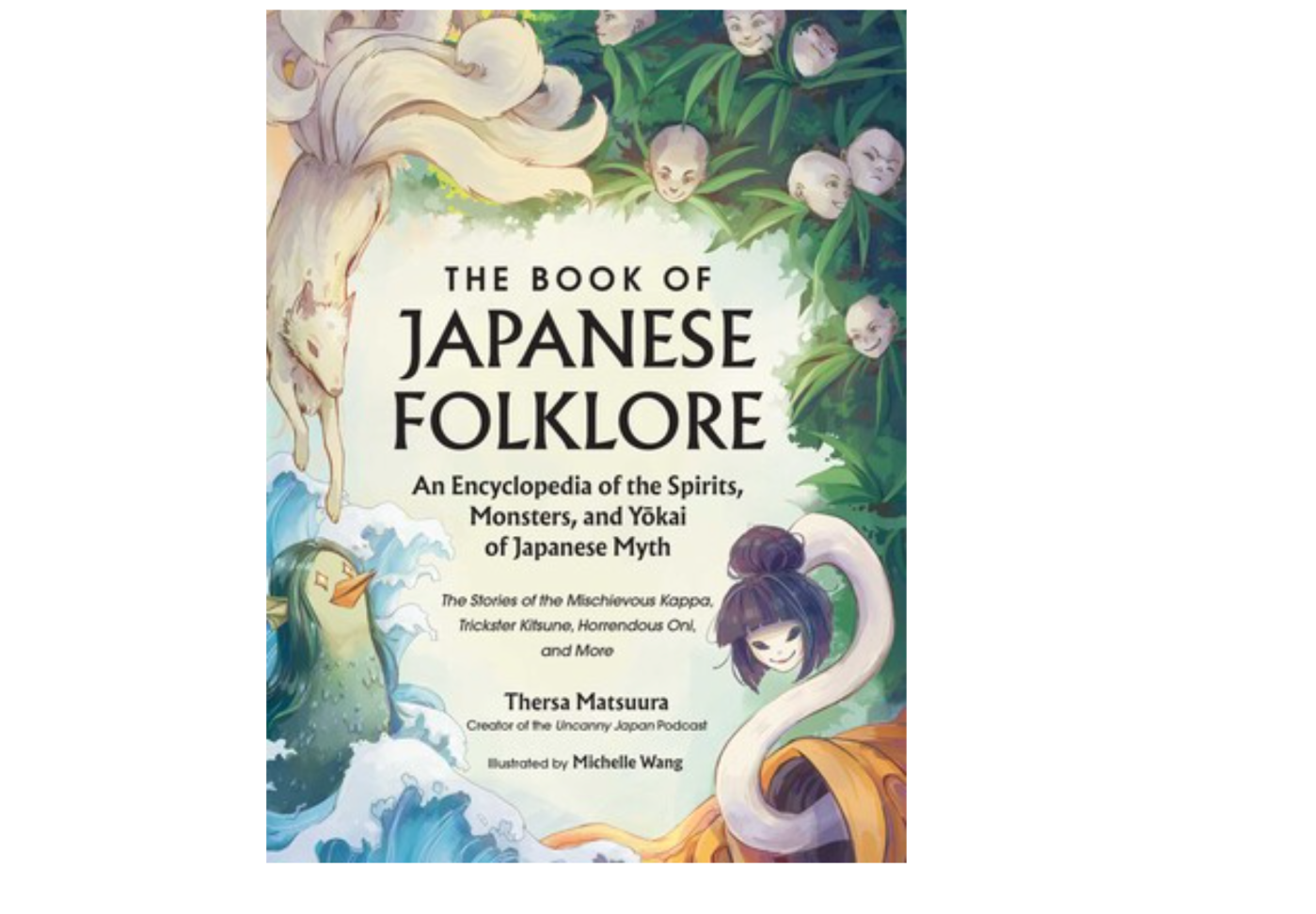
There’s usually one of two ways to consume books like these: They’re either meant to be referenced like an encyclopedia or they’re written in a more prose format for actual sit-down reading rather than perusal and referencing. However, when I received The Book of Japanese Folklore: An Encyclopedia of the Spirits, Monsters, and Yokai of Japanese Myth by Thersa Matsuura, I was surprised to see that the book offered the best of both worlds — a rarity in this genre.
As you might surmise by its title, the encyclopedia dives into the history and mythology of Japanese myths, monsters, and spirits from well-known legends like the Kitsune and Kappa to lesser-known tales like the Zashiki Warashi.
One of the biggest downfalls many reference books fall into is making them too Americanized. Given that we’re pulling mythology from all over the world, it’s critical to honor and acknowledge the culture these myths hail from if you have any hope of understanding them beyond the surface. Not everything needs to completely cater to us self-centered Americans, it’s okay. Promise. One of my favorite components of Matsuura’s Japanese-based encyclopedia is that it doesn’t treat readers like we’re stupid. Each entry begins with the beastie’s name and we even get the name written in Japanese lettering right under it.
While it’s cool to learn more about cultural folklore, not being able to pronounce the names makes it all a little pointless, don’t you think? So, Matsuura offers readers a super easy pronunciation guide for each entry. She also offers the translation of the name in English and the etymology that explains the context further. Matsuura even provides a list of creatures that are similar or related to the one at hand for a more well-rounded understanding of the many interwoven iterations that we often see in folklore from all cultures. Naturally, different locations and time periods usually have varying recordings and it’s fun to see how they overlap.
Each entry gives readers an overview of what they need to know about every monster or spirit and then dives in deeper with “Background and Popular Stories” (the history and historical works relevant to each beast) and “In Modern Stories” blurbs that tackle the modern pop culture relevance and debunks some common misnomers fueled by modern retellings. Some entries also include fun facts in the form of “Now You Know” paragraphs.
As far as setups for this kind of book go, the easy-to-use table of contents, the glossary of relevant terms, and the more in-depth index to search for components of the book make it a whole lot easier to find what you’re looking for. Matsuura also offers readers the tools to understand and contextualize these concepts more broadly.
One reason people don’t often sit down and read these kinds of reference books like a novel stems from the fact that the font is usually minuscule, the writing style is often dry and matter-of-fact, and the setup isn’t engaging. To combat that, The Book of Japanese Folklore is beautifully illustrated by Michelle Wang and uses a large and easy-to-read font. The compelling sections and pop culture references also make it more interesting and relatable to modern audiences than your typical rinse-and-repeat encyclopedias. I found myself reading multiple sections at a time.
The well-roundedness of the book itself and its contents make it more universal and palatable than these books usually are — whether you’ve seen some pop culture depictions of these monsters and want to learn more, you’re obsessed with folklore and have dozens of likeminded books on your bookshelf (or book piles), you need to do research for your own projects, or you just like Japanese culture. The conversational yet informative writing style allows anyone from around middle school age and beyond to enjoy the book.
I’m always drawn to books that genuinely honor and depict the culture they’re covering. Everything from the gorgeous watercolor Japanese artwork to the cultural context offered within the burnt orange-rimmed pages are clearly a love letter to Japan and all of its culturally rich whimsy. If I were in a bookstore choosing a book on Japanese beasts, this one would immediately draw me in.
You can find the book HERE.
Bonus points for anyone who grabs the book from a bookstore (especially a locally-owned small bookstore). Extra extra points if you get it from Japanese, women, AAPI, or BIPOC-owned bookstores.
You can find more about Thersa Matsuura HERE.
The publisher gifted me a copy of the book.
 Xandra Harbet
Leave a comment